The Most Misunderstood Empires in History
Pop culture has a relentless habit of flattening complex human history into simplistic Hollywood tropes. We are taught to view ancient civilizations through the narrow lens of pure conquest, categorizing them as either enlightened philosophers or bloodthirsty barbarians. However, modern archaeology and polymathic research prove otherwise. By looking beyond the battlefield and examining the socioeconomic structures of the past, we can decode the myths and uncover the highly sophisticated realities of the world's most misunderstood empires.
Beyond the Barbarian Myth: The Northern Voyagers
When we think of the Norsemen, cinema paints a vivid picture of mindless raiders. Today, modern travelers might only associate the name with luxury viking cruises traversing the fjords, or perhaps boarding a commercial viking line ferry in Scandinavia. Yet, the viking civilization was defined by advanced naval engineering, poetry, and vast global trade networks.
A highly coordinated viking row allowed their revolutionary shallow-draft longships to navigate deep, treacherous oceans and narrow inland rivers alike. While the terrifying craftsmanship of a high-carbon viking sword was indeed legendary in battle, these people were primarily farmers, explorers, and merchants who connected the Middle East to remote island nations in the North Atlantic.
Similarly, the Celtic tribes are profoundly misunderstood. Long before the celtic cross became a widespread Christian symbol, these sophisticated societies were absolute masters of metallurgy and agriculture. They dominated European trade routes, exchanging highly prized goods like Celtic salt to preserve food across the continent. Their rich oral traditions, echoing through time like a sudden strike of celtic thunder, carried deep philosophical meaning, complex legal codes, and astronomical knowledge rather than just war cries.

The Classical Illusions of Power
In the Mediterranean, the grand narrative of the roman empire dominates western historical thought. Those passionately studying roman empire history often obsess over its eventual collapse. Scholars and internet forums endlessly debate who destroyed the roman empire, frequently blaming violent barbarian invasions for the abrupt fall of roman empire. In reality, the roman empire fall was a slow, centuries-long systemic economic fragmentation and a gradual transition of power, not a sudden apocalyptic event.
Meanwhile, our perception of the Spartans is almost entirely skewed by modern cinema and graphic novels. We envision the legendary 300 Spartans as the ultimate, invincible warriors bred only for death. While spartan military discipline was undeniably strict, their society was actually one of the most politically stable in ancient Greece. They featured a unique dual-kingship, a system of checks and balances, and a constitution that prioritized collective duty and surprisingly advanced property rights for women, long before other Greek city-states.
Nomadic Architects and Eastern Sovereigns
Moving East, the mongol empire is almost exclusively remembered for the brutal, sweeping conquests of Genghis Khan. Yet, the Mongol Empire created the Pax Mongolica, a remarkable century of unprecedented peace, free trade, and religious tolerance that safely connected Asia to Europe. Their administrative genius established global postal systems and paper currency across vast territories, leaving profound architectural and cultural marks that can still be seen from modern-day Uzbekistan to the distant borders of the Middle East.
If a student asks, "what is ottoman empire?" the western answer often reduces it to a mere military threat to Europe. However, the ottoman empire was a marvel of bureaucratic efficiency, scientific advancement, and multiculturalism. Originating in what is now modern Turkey, the Ottoman Empire was ruled by a sultan who oversaw a highly complex legal system. This system brilliantly integrated Islamic law with local customs, fostering a renaissance of art, medicine, and architecture that bridged the East and the West for over six centuries.

The Mathematical Genius of the AmericaN Empires
Perhaps the most tragic historical misunderstandings involve the brilliant pre-Columbian civilizations. The Aztec empire is frequently dismissed as a primitive cult of human sacrifice. Yet, their magnificent capital, tenochtitlan, was a marvel of urban planning. Built entirely on a lake with advanced aqueducts, causeways, and floating agricultural gardens, it rivaled the beauty and hygiene of Venice. Long before the Spanish arrived to confront the ruler montezuma, the Aztecs had established mandatory universal education for all children.
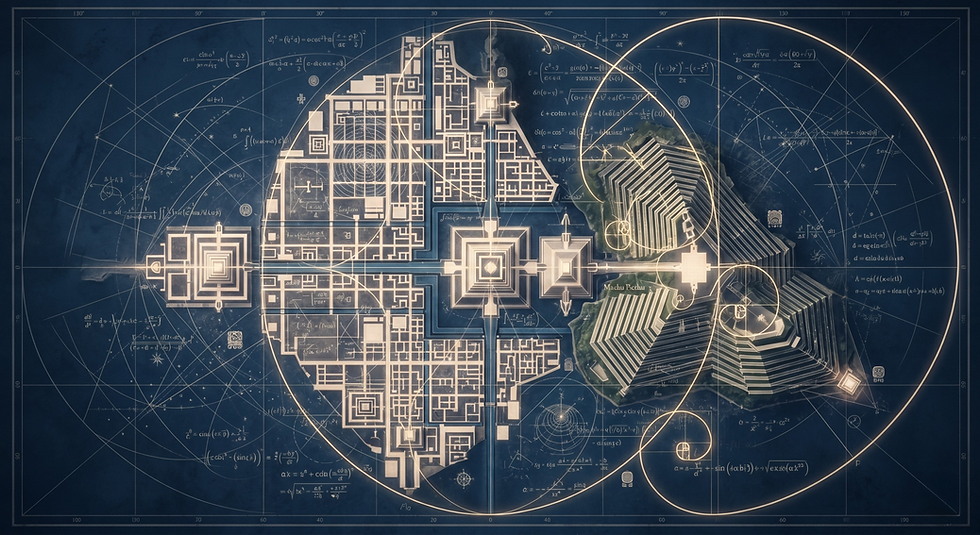
Further south in the Andes, the inca built the largest empire in the Americas—remarkably, without the use of the wheel or a formal written language. Under the visionary leadership of pachacuti, they constructed breathtaking architectural wonders like machu pichu. They engineered earthquake-resistant stone walls and vast agricultural terraces that still baffle modern architects. In Mesoamerica, the mayan empire achieved unparalleled heights in astronomy and mathematics, independently inventing the concept of zero and creating incredibly accurate calendars long before European astronomers.
History is rarely as simple as the victor’s narrative. By examining these fascinating empires through a polymathic lens—merging engineering, sociology, and economics—we reclaim the true, multidimensional story of human civilization.